Holiday Gift Returns on Shopify: Turn Them Into Exchanges
Holiday gift returns arrive in January with no receipt or order link. Learn how Shopify stores can turn gift returns into exchanges and store credit.

Every January, a different kind of return lands on your desk. The buyer is not the person returning the item. The recipient does not know what was paid, may not have an order number, and usually wants something else, not their money back. Holiday gift returns are the single best exchange opportunity on your calendar, and most Shopify stores handle them with the same refund-first flow they use for everything else.
According to a Shorr consumer survey, nearly two in three consumers (65%) have returned a gift during the holiday season. Retailers know the volume is coming: in the 2025 NRF and Happy Returns report, retailers expected 17% of holiday sales to be returned. This guide covers how to set your store up so a gift return becomes a second sale instead of a refund.
Why holiday gift returns are different
A normal return starts with the customer who bought the item. A gift return breaks three assumptions your process probably relies on.
- The returner is not the purchaser. The email on the order belongs to the gift giver, not the person holding the box.
- The price is unknown. Recipients often do not know what the gift cost, and the giver may not want them to.
- The goal is a better fit, not a refund. Most gift recipients want a different size, color or product. That is an exchange by definition.
The last point matters most. The same NRF report found that 76% of consumers prefer return options that offer instant refunds or exchanges. A gift recipient who is offered a swap on the first screen is far less likely to ask for cash.
The holiday return window arms race
Large retailers have trained shoppers to expect a long tail on holiday returns. Walmart, for example, lets most items bought from October 1 through December 31 come back through January 31, 2027. Last season, Amazon, Macy's, Kohl's and others published similar mid-to-late January deadlines.
You do not need to match the biggest retailers. But a gift buyer who sees a 30-day window ending January 5 will often hesitate to buy from you at all. Two practical options:
- Extend only the gift-heavy window. Give orders placed between mid-November and December 24 a deadline in late January. Shopify now supports this through return window overrides, which we walk through in our holiday return window overrides guide.
- Extend exchanges, not refunds. A longer window for exchanges and store credit costs you far less than a longer window for cash refunds, because the revenue stays in the business.
Whatever you choose, write it down where gift buyers will see it: the product page, the cart and the order confirmation. A rule nobody can find does not help conversion.
Fix the gift return flow on Shopify
Let recipients find the order without the giver
The most common failure is a recipient who cannot start a return because they do not have the order number or the purchaser's email. Decide in advance how you will handle this. A simple, safe pattern is to accept the order number plus the shipping name and zip code from the package label, and to keep a short support macro ready for recipients who only have the item.
Shopify's own self-serve returns have a notable limit here. Per the Shopify Community returns AMA, exchanges are not supported in the native self-serve flow; customers can only leave a note asking for one. For a gift recipient, that means an extra email thread at the exact moment you want a quick swap. If you want recipients to pick a replacement themselves, you need an exchange-capable portal. Our same-order versus new-order exchange guide explains the two ways to process the swap.
Prefer store credit over a refund to the giver
When a recipient returns a gift for money, the refund goes back to the original payment method, which belongs to the giver. That is awkward at best. Store credit solves it cleanly: the value stays with the person who has the item, and it stays in your store.
Merchants in the Shopify community have run into the sharp edges of this. In one community thread on gift card emails during returns, a retailer found that issuing a gift card for a returned gift also notified the original purchaser, so both people ended up holding the credit. The lesson is not to avoid store credit. It is to run a test return on a gift order before peak season and check exactly who receives which email.
Exchange It lets you offer the refund as store credit through a digital gift card as one of the refund options, and you can choose how store credit is issued. You can read how we think about this in our post on refunding with store credit.
Add a small incentive to swap
The cheapest way to turn a gift return into a second sale is to make the exchange the easy choice. Waive the exchange fee, add a little bonus credit, or offer free shipping on the replacement. Compare the cost of that nudge to what a refund costs you: the original sale, the outbound shipping you already paid, and the return shipping on top. We break down the numbers in how to convert returns into exchanges.
Protect yourself from January fraud
Gift season attracts opportunistic returns. The NRF report found that 9% of all returns are fraudulent, and a ReturnPro survey of retail leaders found 75% of retailers reporting fraud increases during the holidays. Gift returns are hard to verify because the original buyer is not in the room.
Three light-touch controls help without punishing honest recipients:
- Prefer exchanges and store credit for gift returns. Credit is much harder to monetize than a card refund.
- Require condition rules. State plainly that tags must be attached and items unworn or unused.
- Review high-value requests. Hold manual approval for large orders while auto-approving small, low-risk exchanges.
For a deeper look, see our guides on combatting return fraud and handling serial returners.
A two-week gift return checklist
You have time. Work through this before the first holiday order ships.
- Decide your holiday window and publish it on product pages, the cart and confirmation emails.
- Choose how recipients identify an order and write the support macro.
- Turn on exchanges and store credit as the first options customers see.
- Run a test gift return end to end and note every email that goes out and to whom.
- Set an exchange incentive you can afford at peak volume.
- Brief your support team on gift scenarios, including no-receipt and wrong-size requests.
If you are also preparing for Black Friday volume, our BFCM 2026 returns readiness checklist covers staffing, policy and portal prep.
Make January your best month for exchanges
Gift returns are not a cost to be minimized. They are a pool of customers who just received your product from someone who trusted your brand, and who are one good experience away from becoming buyers themselves. Give them a fast swap, a fair window and credit that stays with them, and a January return turns into a February order.
Ready to make exchange the default for holiday gift returns? Install Exchange It from the Shopify App Store and have your exchange-first flow live before the rush.
Related Articles
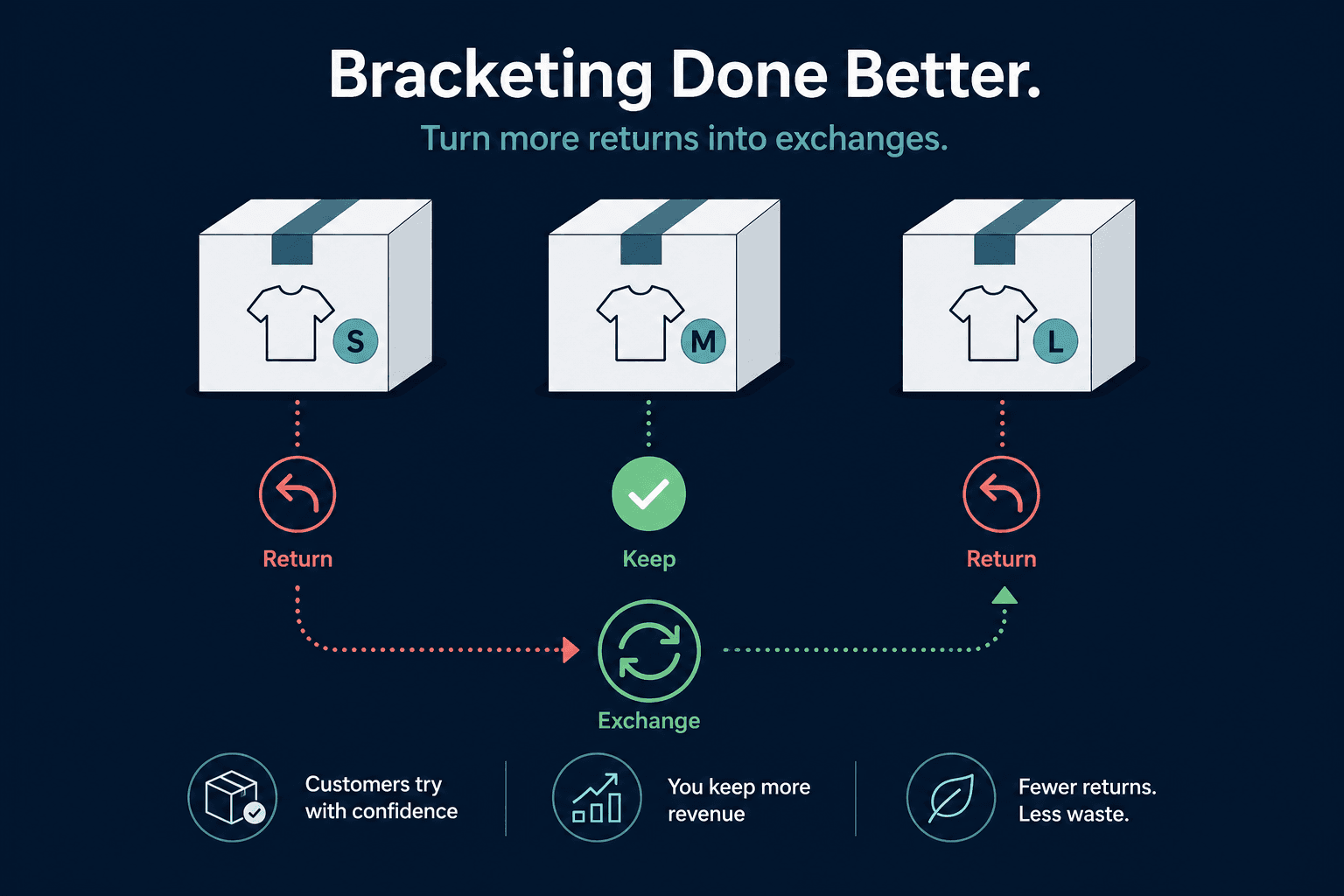
Bracketing Is Costing You Thousands: How to Turn Multi-Item Returns Into Exchanges
63% of shoppers buy multiple sizes to try at home. Learn how to convert bracket returns into exchanges and retain revenue instead of processing refunds.
Refunding With Store Credit: A Game Changer For Your Returns
Discover how offering store credit as a refund option can improve customer retention, reduce revenue loss, and transform your Shopify returns experience.
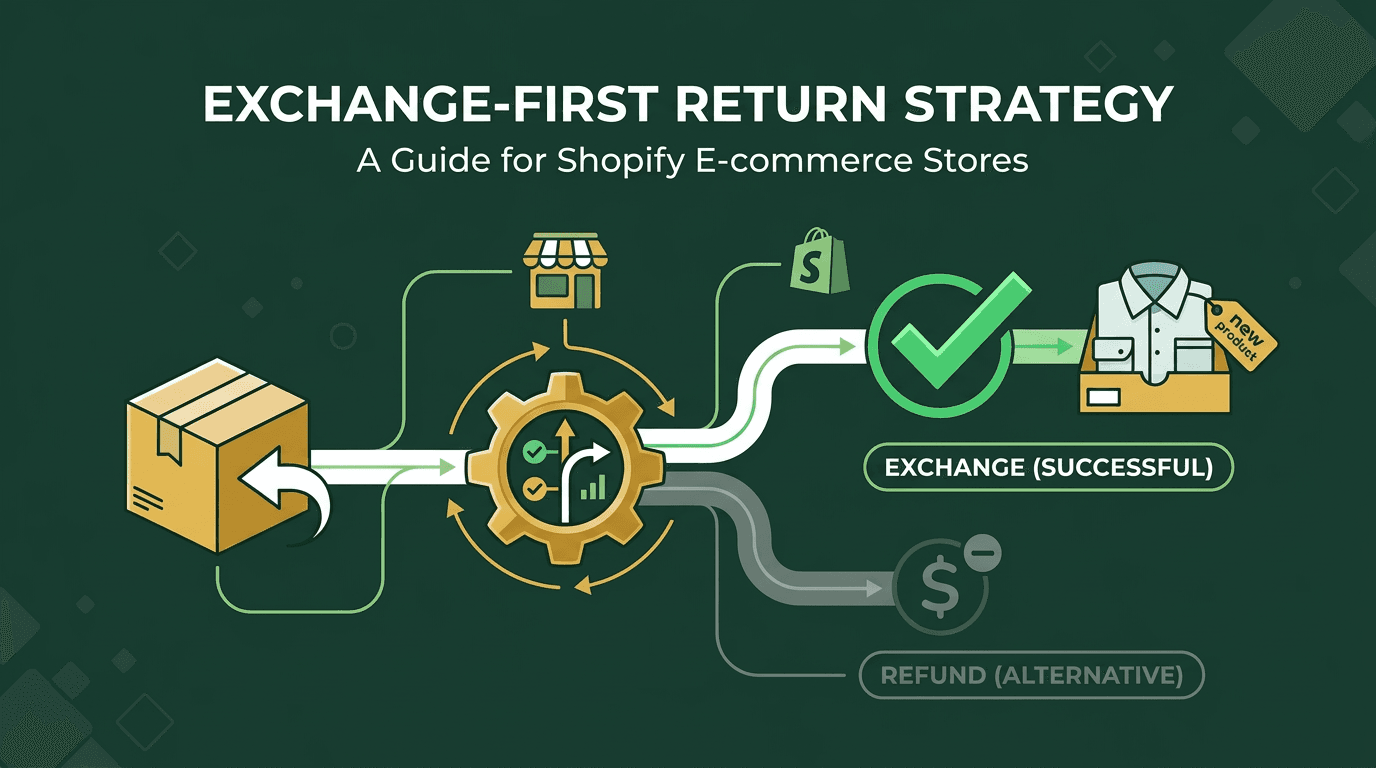
How to Turn Shopify Returns Into Revenue With an Exchange-First Strategy
Learn why leading Shopify stores are shifting from refund-first to exchange-first return flows — and how to retain 30-40% more revenue from every return request.