How Agentic Commerce Is Changing Returns and Exchanges for Shopify Merchants
AI-attributed Shopify orders grew 15x in one year. Here's what the rise of agentic commerce means for your returns and exchange strategy.
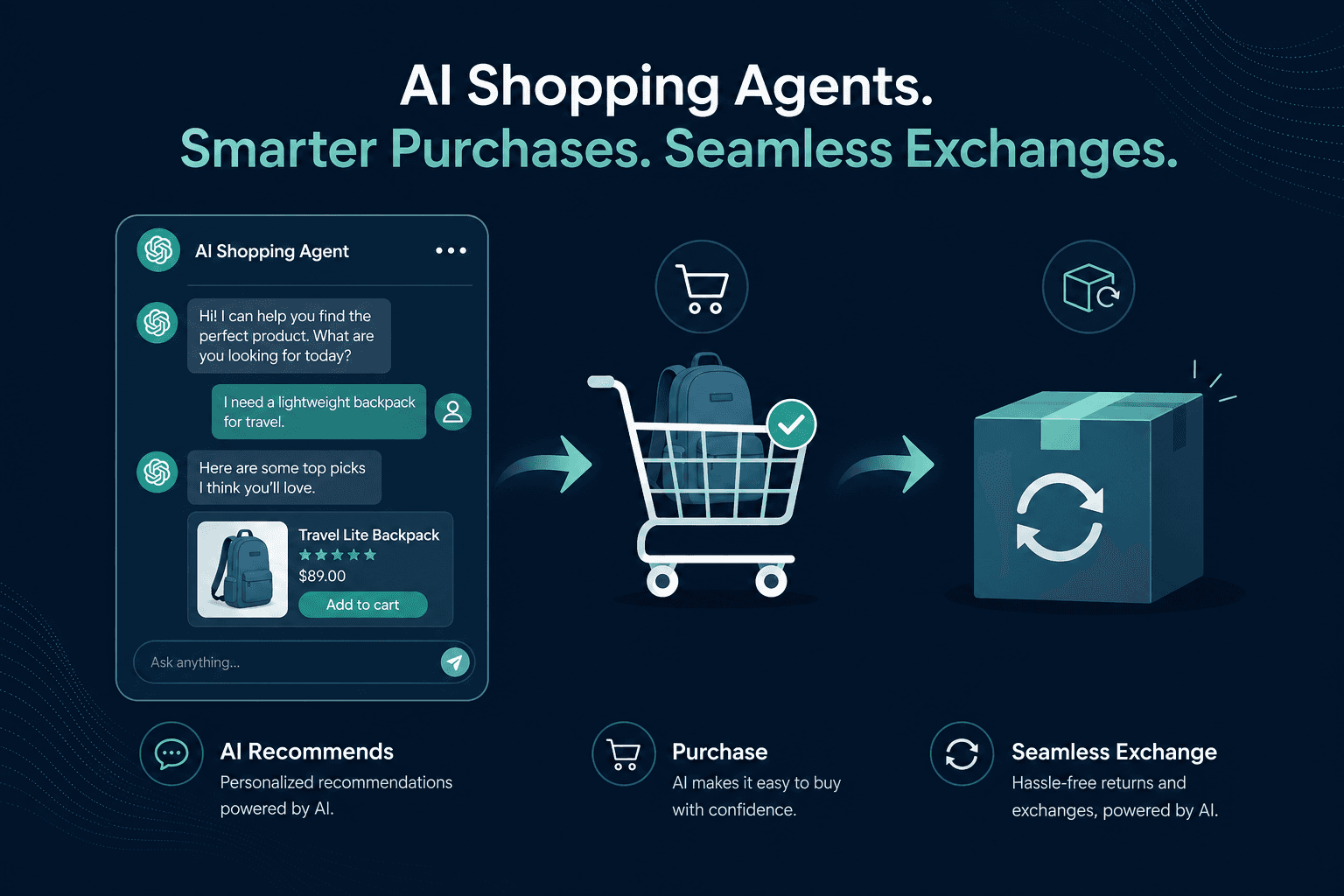
A new sales channel just landed, and it's growing faster than anything before it
Between January 2025 and January 2026, AI-attributed orders on Shopify grew 15x. Not 15%. Fifteen times. AI-driven traffic to Shopify stores surged 8x year over year in the same period. Shoppers are now discovering, comparing, and buying products inside conversations with ChatGPT, Microsoft Copilot, Google AI Mode, and the Gemini app, often without ever visiting a traditional storefront.
This shift has a name: agentic commerce. And while most of the conversation so far has focused on discovery and checkout, there's a critical downstream question that few merchants are asking yet: what happens when a customer who bought through an AI agent wants to return or exchange their purchase?
What agentic commerce actually is (and why it matters for post-purchase)
In traditional ecommerce, a customer searches for a product, browses options, and checks out. In agentic commerce, an AI agent handles some or all of those steps: surfacing relevant products, answering questions, comparing options, and guiding the shopper through to purchase.
Shopify's Agentic Storefronts, which went live for millions of merchants in March 2026, connect your catalog to every major AI platform automatically. Products are syndicated through Shopify Catalog, and orders flow into your Shopify admin with full channel attribution. No extra apps, no custom integrations, no additional transaction fees beyond standard processing.
The infrastructure underpinning all of this is the Universal Commerce Protocol (UCP), co-developed by Shopify and Google and launched at NRF in January 2026. UCP is an open standard that lets any AI agent discover products, apply discounts, and complete transactions. It's already endorsed by Walmart, Target, Visa, and Mastercard.
But here's the part that matters for returns and exchanges: the customer who buys through an AI agent has a fundamentally different relationship with your store than someone who spent 20 minutes browsing your product pages.
AI-assisted purchases may actually mean fewer returns
One of the most significant findings from early agentic commerce data is that AI-assisted shoppers appear to return items at lower rates. Adobe Digital Insights reported in April 2026 that 69% of consumers using AI for online shopping say they are less likely to return an item they bought with AI help. The same survey found that 79% feel more confident in their purchase after using an AI assistant.
This makes intuitive sense. When an AI agent recommends a product, it's drawing on structured data: sizing information, reviews, product specs, and comparison attributes. It's doing the research a human shopper might skip. The result is a better-matched purchase, which means fewer "it wasn't what I expected" returns.
The data supports this beyond surveys. According to Stord's State of AI 2026 report, & Other Stories (an H&M Group brand) saw a 32% reduction in return rates after deploying AI-powered fit recommendations and interactive 3D product guides for their knitwear line. While that's a specific implementation rather than agentic commerce broadly, it demonstrates the principle: better pre-purchase intelligence leads to fewer returns.
The conversion numbers are hard to ignore
Beyond returns, the conversion data from AI-referred traffic is striking. As of March 2026, Adobe found that AI-referred traffic converts 42% more often than non-AI sources. This is a dramatic reversal from just one year earlier, when AI traffic actually converted worse than traditional sources.
AI-referred visitors are also more engaged: 12% higher engagement rates and 33% lower bounce rates compared to non-AI referrals. Anchor Group data cited by Triple Whale puts the gap even wider, showing AI-engaged shoppers converting at roughly 12.3% versus 3.1% for unassisted shoppers.
During the 2025 holiday season, AI-referred visits converted 31% more often, spent 45% more time on site, and had a 33% lower bounce rate. Retailers with branded AI agents grew holiday sales 59% faster than those without (6.2% vs 3.9% year over year), according to Salesforce data.
Higher conversion combined with potentially lower return rates is the best of both worlds. But only if your post-purchase infrastructure is ready for this new type of customer.
The post-purchase gap in agentic commerce
Here's the challenge: the AI agent that helped your customer find and buy a product doesn't stick around for the return. If a shopper purchases a jacket through ChatGPT and later needs a different size, they're navigating your return process on their own, likely on your website or through email.
Shopify has started addressing this with the Knowledge Base app, which lets merchants control what AI agents say about their return policies, sizing guidance, and shipping windows. This is a step in the right direction: it means an AI agent can tell a customer "this brand offers free exchanges within 30 days" before they buy, setting proper expectations.
But the actual return and exchange flow still happens outside the AI conversation. And that's where most merchants have the biggest opportunity.
Why exchange-first matters even more with agentic orders
Consider the economics. An AI-referred customer who converts at 12% (versus 3% from organic) is, on average, a higher-intent buyer. They've done their research through the AI agent, they've compared options, and they've committed. If that customer needs to return, the last thing you want is to lose them entirely through a clunky refund process.
An exchange-first return strategy is the natural complement to agentic commerce. The AI agent brings the customer in with confidence; the exchange flow keeps them when the product isn't quite right. You retain the revenue, the customer stays engaged, and your AI channel attribution data stays clean.
Your return policy is now part of your AI discoverability
Here's something most merchants haven't considered yet: AI agents are already reading and factoring in your return policy when making recommendations. Through the Shopify Knowledge Base app and structured product data, AI agents can surface return and exchange information directly in the shopping conversation.
A generous, clearly stated exchange policy could become a competitive advantage in AI-driven discovery. If an AI agent is choosing between two similar products for a customer, and one brand offers hassle-free exchanges while the other has a restrictive return policy, the agent may factor that into its recommendation. Your return policy isn't just a conversion tool on your website anymore; it's part of your AI search profile.
What smart merchants are doing now
The merchants positioned to win in agentic commerce are taking a few practical steps:
- Activating Agentic Storefronts: If you haven't toggled on AI channels in your Shopify admin (Settings > Sales Channels), you're invisible to the fastest-growing sales channel in ecommerce.
- Configuring the Knowledge Base app: Make sure your return and exchange policies are structured and accessible to AI agents. Clear, machine-readable policy data gives agents confidence in recommending your products.
- Optimizing product data: AI agents rely on structured attributes (sizing charts, materials, fit descriptions) to make accurate recommendations. Better data means better matches, which means fewer returns.
- Building an exchange-first return flow: When AI-referred customers do need to return, guide them toward exchanges rather than refunds. The high-intent nature of AI-referred purchases means these customers are more likely to accept an exchange if the process is easy.
- Tracking AI channel attribution: Shopify now shows which AI platform drove each sale. Monitor return and exchange rates by channel to understand whether AI-referred orders behave differently from your traditional traffic.
The early innings of a big shift
It's worth keeping perspective. AI-referred traffic is growing exponentially, but it's compounding off a small base. ChatGPT currently drives roughly 0.2% of total ecommerce sessions. The MRC 2026 Global eCommerce Payments & Fraud Report found that while 63% of merchants are exploring agentic AI payments, only 19% have live implementations.
But the trajectory is unmistakable, and the merchants who get their post-purchase experience right now will have a structural advantage as the channel scales. Returns and exchanges are the unglamorous infrastructure that makes the whole system work: you can have the best AI discoverability in the world, but if a customer's first exchange experience is frustrating, they won't come back through any channel.
Get your exchange flow ready for the agentic era
The rise of agentic commerce is one of the most significant shifts in ecommerce since mobile shopping. And while the discovery and checkout pieces are getting most of the attention, the post-purchase experience will determine which merchants actually retain the customers these AI agents bring in.
Exchange It gives Shopify merchants a flexible, exchange-first return flow that works for every sales channel, including orders from AI agents. Offer exchanges, store credit, or refunds with configurable rules, free exchange shipping, and same-order or new-order fulfillment. As agentic commerce grows, make sure your post-purchase experience keeps up.
Related Articles

Your Back-to-School Return Policy Is a Conversion Lever
Back-to-school 2026 shopping runs online and starts in June. Here's why your back-to-school return policy decides whether parents buy shoes and apparel from you.

TikTok Shop Returns: Get Your Shopify Exchange Flow Ready
TikTok Shop hits $23.4B in US sales in 2026. Social commerce return rates run higher, so here's how to ready your Shopify returns and exchange flow.
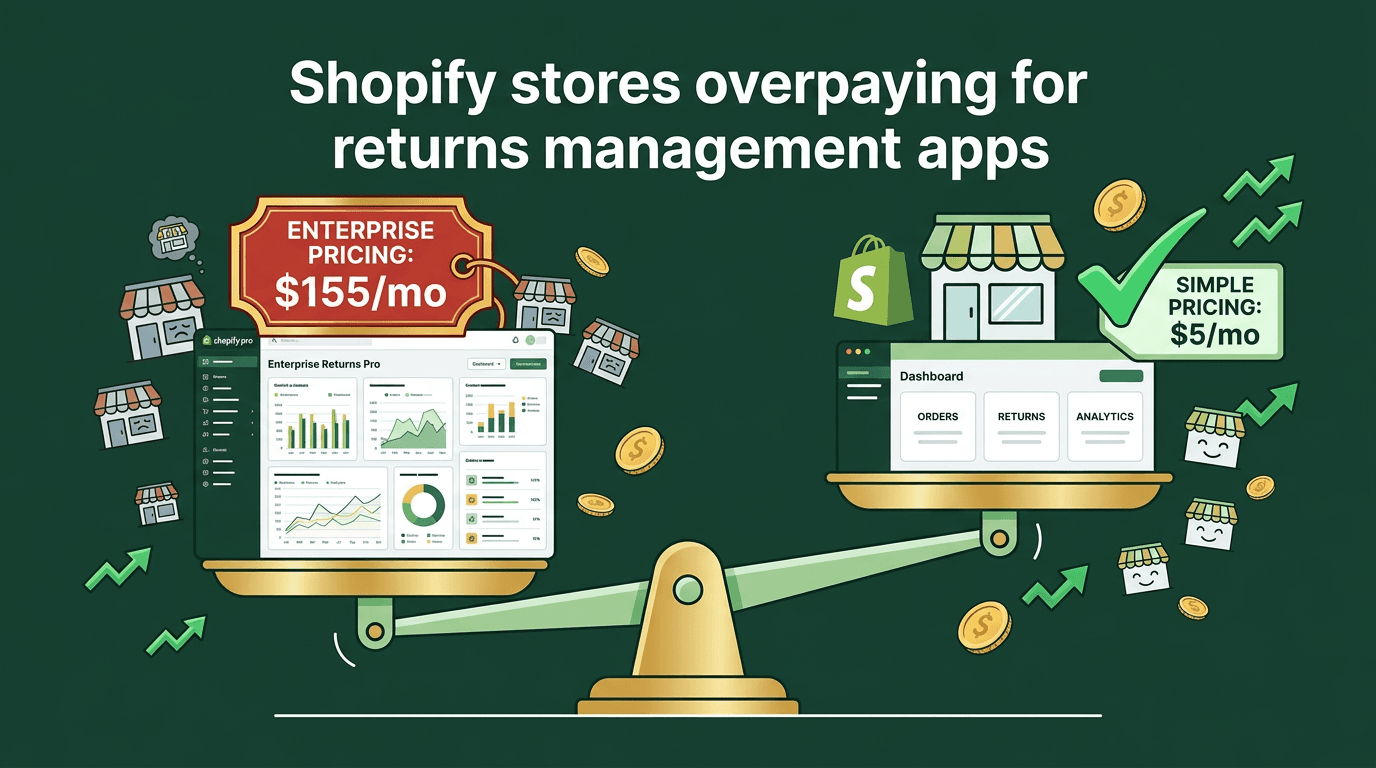
Why Most Shopify Stores Overpay for Returns Management — And What to Do About It
Returns apps charging $100-$200/month are built for enterprise. Here's what small and mid-size Shopify stores actually need — and how to avoid paying for features you'll never use.