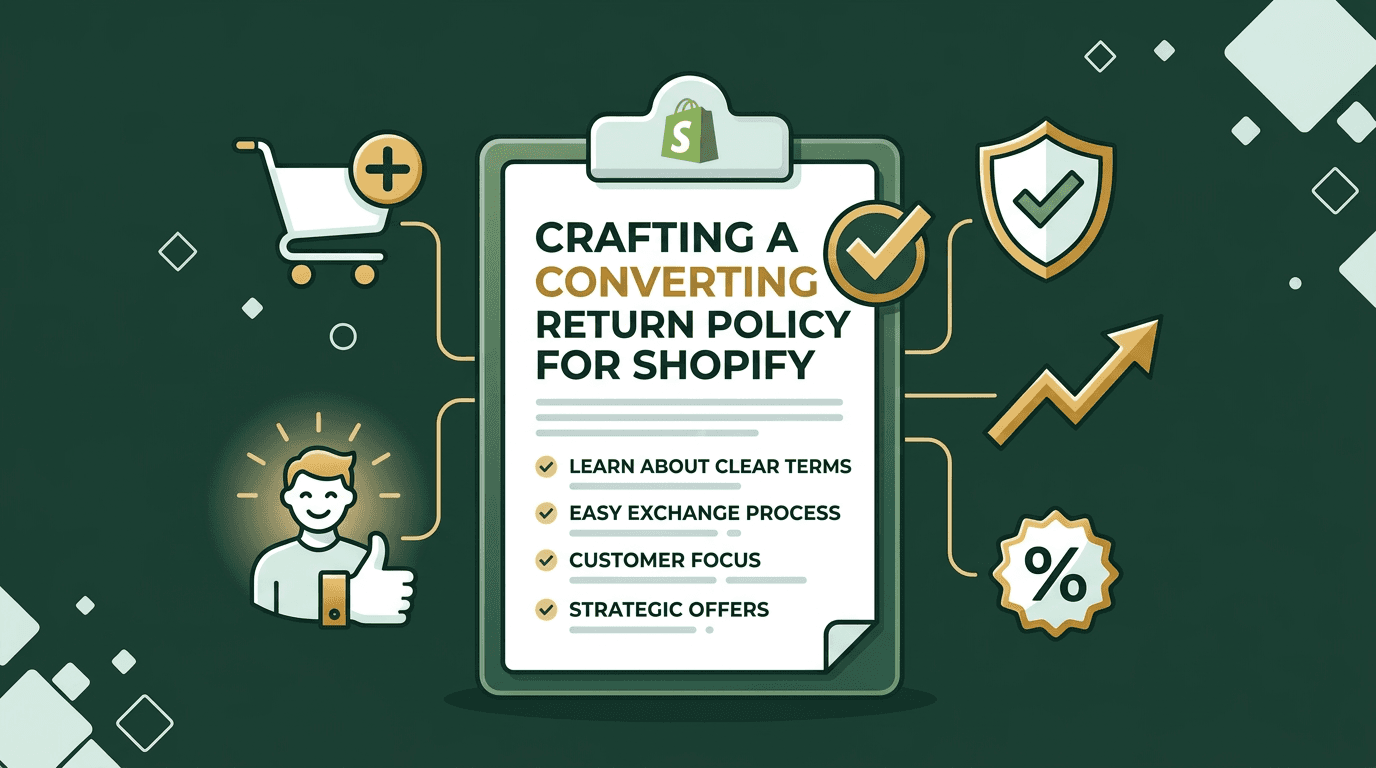
How To Write An E-commerce Exchange Policy
A practical guide to crafting a clear, effective exchange policy for your Shopify store — covering 6 essential elements that build customer trust and protect your business.

An essential component of a well-run online shop is a foolproof e-commerce exchange policy. Whether a customer wants to return an item because they ordered the wrong size, isn't happy with a product, or simply changed their mind — you need a process in place.
E-commerce now accounts for a rapidly growing share of total retail sales globally. With this huge proportion of sales being online, it's natural that returns and requests for exchanges increase with higher sale volumes.
Exchange It is built for Shopify merchants and is a simple solution for processing and completing e-commerce exchanges with great ease. To help you navigate the use of the app with your store, a solid exchange policy will make everything much more efficient.
What is an exchange policy?
An e-commerce exchange policy is straightforward if you do it right. All online retail stores should have a refund and return policy. While this is not necessarily a legal requirement, it is crucial for customer satisfaction.
An exchange is, on a basic level, when you offer the customer the option to swap one item purchased through your store for another. The parameters of what this can include are entirely up to you to define.
Why do you need an exchange policy?
An exchange policy serves several important purposes:
- It enables you to build trust with customers who know they can swap or return items if not satisfied.
- It increases customer satisfaction and builds store loyalty among shoppers.
- Having it stated clearly on your website reduces administrative burden and increases transparency.
- It protects you from potential legal issues if there is a dispute over a sale.
- When a product is returned, an exchange allows you to retain the sale while keeping the customer happy.
6 things to include in your e-commerce exchange policy
1. Explain what exchanges you offer
Being clear on what exchanges you offer is essential. In a broader returns and refunds policy, lay out options like full refunds, partial refunds, or store credit. In an exchange-specific policy, make sure the customer knows what products can be swapped for — items of the same value, the same type in a different size or style, items of lesser value with a partial refund, or higher value with additional cost.
2. Determine the parameters of the exchange
Once you're clear on what's included in exchanges, define the conditions under which an exchange can be made. Can you exchange opened products, or must they be sealed and unused? What condition should a product be in when it arrives back? If you lay this out upfront, there can be little dispute if customers are unhappy with how you handled a return that wasn't in the right condition.
3. Be transparent and upfront
Transparency is key. Tell customers exactly how long they have to return an item, how long it will take to process the exchange, and when they can expect a new item to arrive. Most customers expect a 30-day return period.
Customers also want to be aware of what a return or exchange will cost them, if anything. Will you include a pre-paid returns label in all orders, or do customers need to buy one? Do you encourage customers to re-package the item in original packaging? Be very clear in your policy.
4. Write a simple set of consumer-facing instructions
Give customers simple instructions for how to make a return. A basic bullet-point list of the process — from requesting a return to what happens once it's posted — reduces administrative burden and improves the experience. You can even include screenshots of the returns pages, showing customers exactly where to go and how to navigate them.
5. Have a policy for if a return is denied
Sometimes, it is not possible to grant a customer's return or exchange request — the exchange period may have passed, or the item wasn't returned in the expected condition. Common policy approaches include allowing a customer to keep their purchase and pay return shipping, or offering incentives to re-purchase with your store such as discount codes. Maintaining customer satisfaction even in difficult situations is key to running a successful e-commerce store.
6. Include FAQs
There are always extra things customers want to know. It's difficult to cover every possible question in even the most comprehensive policy. Have a dedicated FAQ space on your website that addresses common questions customers might ask — this reduces the time you spend answering individual questions and builds trust with shoppers.
Getting started
Now that you know the essentials, writing your e-commerce exchange policy doesn't have to be daunting. Keep it clear, transparent, and customer-centric. Then pair it with Exchange It to handle the operational side seamlessly.